
Industrial Design
Industrial design gives a product a purposeful form, intuitive usability and practical manufacturability.

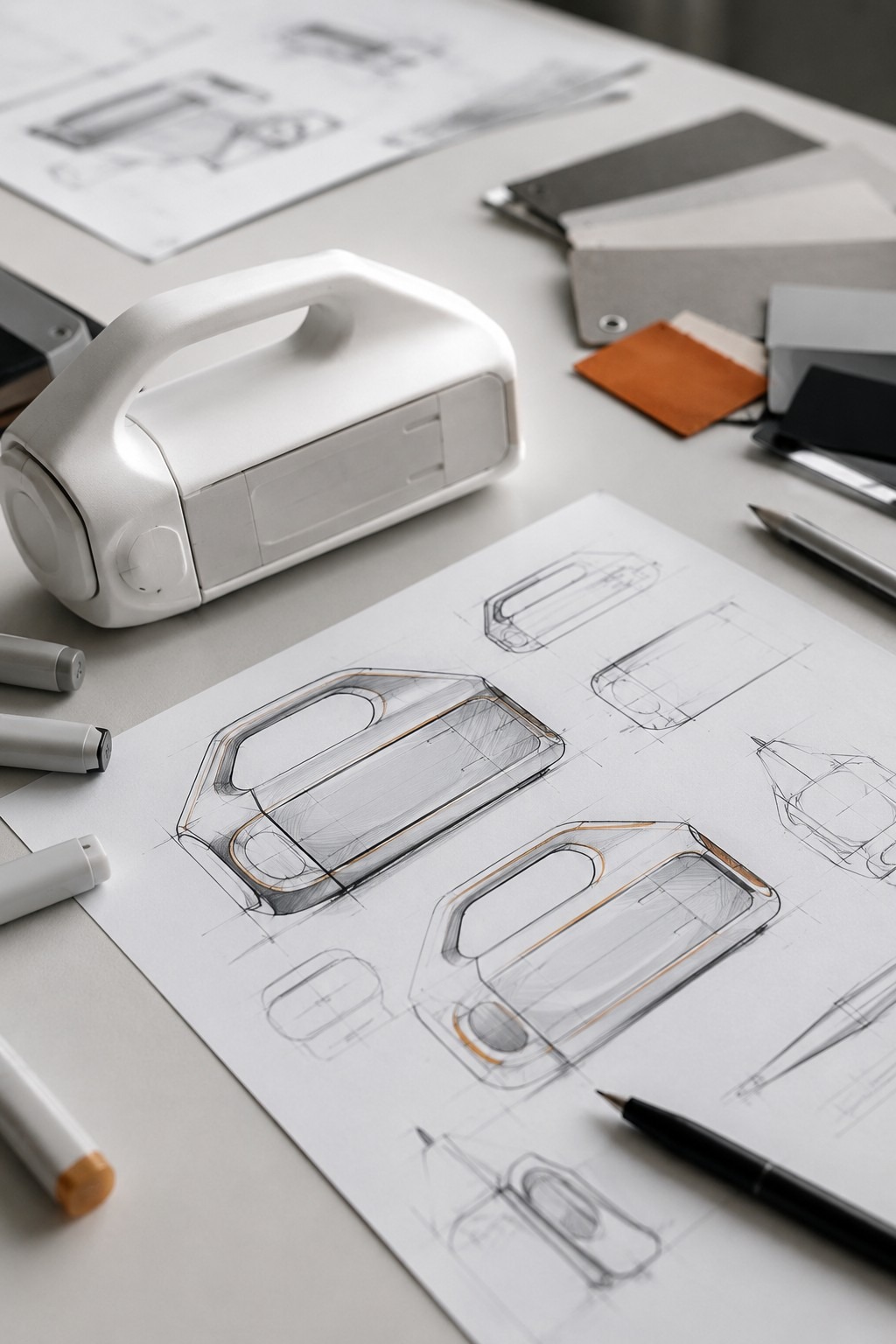
Industrial design defines a product’s form, usability and visual identity. It combines shape, function, ergonomics, safety and manufacturing readiness into a solution that performs reliably in real-world use.
Industrial design is an essential part of product development, where products are developed around user needs, engineering requirements and manufacturing capabilities. The process considers product proportions, materials, user interaction and structural details to ensure the final solution is intuitive, comfortable to use and practical to manufacture.
The focus goes beyond appearance alone. Effective industrial design considers how users understand, interact with and operate a product. A successful design brings together technical performance, usability and visual consistency to create a product that works as a complete solution.
Problems that can be avoided
Why choose Revismo for industrial design?
Design and engineering developed together
Industrial design and engineering influence each other throughout the product development process. At Revismo, we consider manufacturing methods, product use and engineering constraints from the earliest stages to ensure the design is practical to manufacture without requiring costly redesign later.
User-centred design
Successful industrial design helps users understand and operate a product correctly. We evaluate usability, ergonomics, operating environments and potential user errors to create solutions that are intuitive, comfortable and suited to real-life applications.
Integrated with the product development process
Industrial design is one part of a complete product development process. When required, we integrate it with CAD design, prototyping, engineering analysis, product safety and CE compliance to ensure every stage of the project supports the same objectives.
Design developed for manufacturing
Every design decision affects materials, manufacturing processes, assembly and maintenance. During development, we evaluate how the product can be manufactured efficiently while supporting reliability, quality and cost-effective production.
A distinctive product identity
Industrial design helps create products with a recognisable appearance and a clear visual language that supports both functionality and brand identity. A carefully developed design makes products easier to understand, inspires greater user confidence and helps them stand out in competitive markets.
Industrial design workflow
Defining project objectives
Every project begins by understanding the project goals, target users and operating environment. We identify the problem the product is intended to solve, how it will be used and which functional, engineering and visual requirements must guide the design process.
Concept development
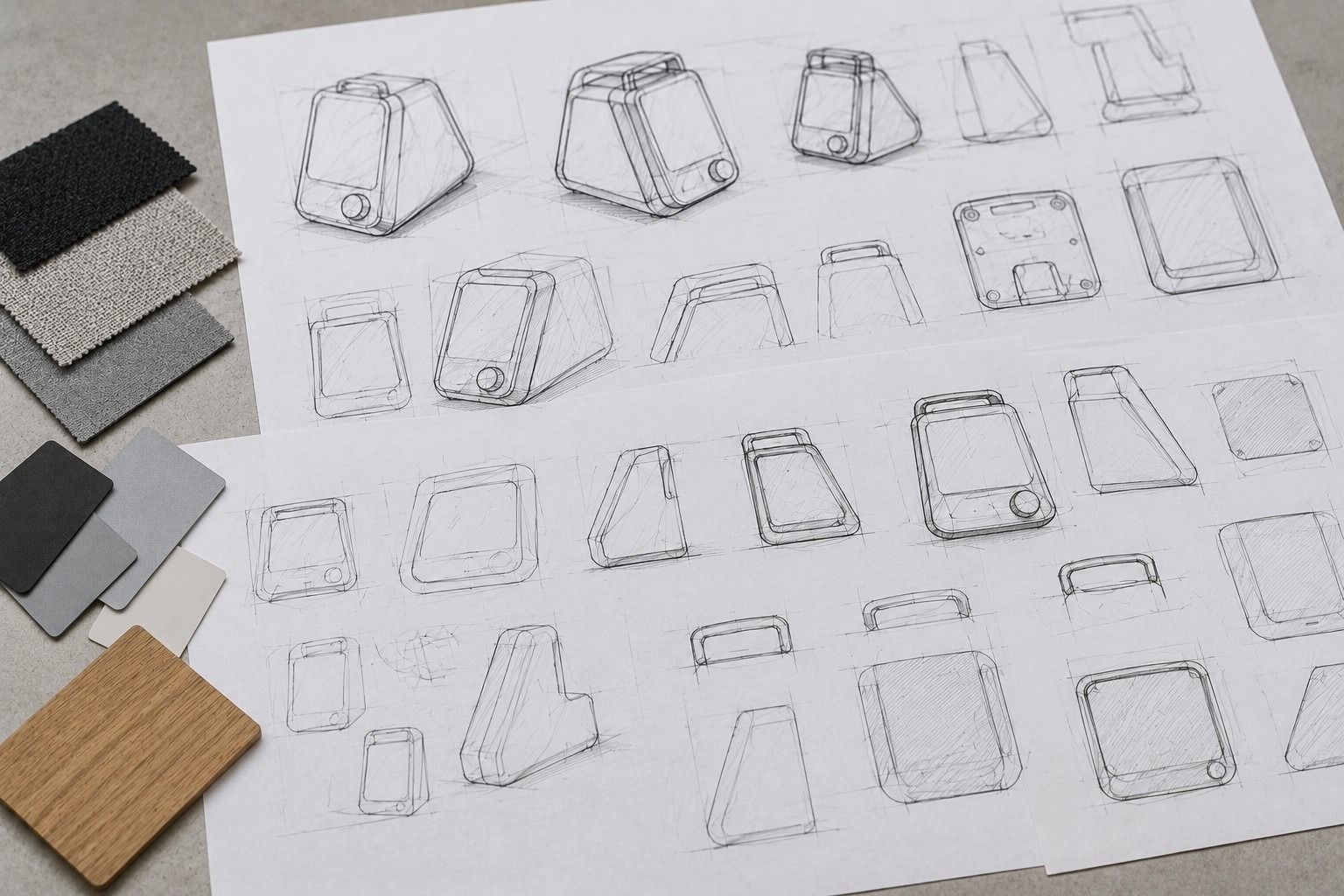
We develop alternative concepts for form, usability and product architecture. Each concept is evaluated based on usability, technical feasibility, manufacturability and visual appeal before selecting the most suitable direction for further development.
Industrial design development
The selected concept is developed into a complete industrial design solution. We refine the product’s proportions, ergonomics, structural details, material selection, visual identity and every key user interaction.
Engineering feasibility review
Industrial design is developed alongside engineering to ensure compatibility with selected components and manufacturing processes. Where necessary, we refine both the form and engineering solutions to achieve the project objectives while maintaining practical manufacturability.
Prototyping and evaluation
When required, we create physical or digital prototypes to evaluate dimensions, ergonomics, usability and the overall user experience. Testing results provide valuable feedback for refining the design before detailed engineering or investment in manufacturing.
Preparing the design for engineering
The result is a well-developed industrial design that provides a solid foundation for CAD design and detailed engineering. When required, we continue supporting the project through engineering services, prototyping, engineering analysis, CE compliance and manufacturing preparation.
How does industrial design differ from visual design or engineering?
Visual design primarily focuses on how a product looks. Engineering focuses on how the product functions and how it can be manufactured. Industrial design brings these disciplines together by combining user needs, ergonomics and usability with technical feasibility.
During the industrial design process, we evaluate how users perceive, understand and interact with the product, ensuring its form supports its intended function. This includes refining product proportions, control layouts, accessibility, material selection and manufacturability.
Industrial design is therefore much more than styling or engineering alone. Its purpose is to develop a product where visual identity, usability, engineering performance and manufacturing readiness work together as one integrated solution.

If anything is still unclear
Industrial design focuses on the overall performance of a product from visual, technical and user experience perspectives. Its purpose is to combine form, functionality, ergonomics and manufacturability into a cohesive solution that is both user-friendly and economically viable.
The process includes designing form and proportions, selecting suitable materials, defining a logical product structure and evaluating user scenarios. The result of industrial design is a product that looks professional, functions intuitively, supports brand values and is optimised for serial production.
The cost of industrial design is directly related to the project scope and technical complexity. Projects involving complex functionality or multiple user scenarios generally require more extensive research and development work, resulting in a higher overall cost.
The number of design concepts also has a significant impact on pricing, as each additional concept requires further analysis, ideation and design work. The use of uncommon materials or specialised manufacturing technologies may also require additional investigations and feasibility assessments, increasing the overall project effort.
Yes. Industrial design should take CE requirements and applicable safety standards into account from the earliest stages of development. This means that throughout the design process, the product or solution is evaluated to ensure compliance with relevant standards and regulatory requirements.
Early compliance assessment helps avoid costly redesigns later in the project and ensures that the final product is safe for the end user. Regulatory requirements should therefore be treated as a natural input to the design process rather than a separate activity carried out at the end of development.
Industrial design and engineering fulfil different but complementary roles within the product development process.
Industrial design focuses on the product’s appearance, user experience, ergonomics and the way users interact with the product. Engineering ensures that the design functions in practice by creating a structure that is technically sound, safe, manufacturable and compliant with applicable standards. Designers define the concept and user logic while engineers transform those ideas into functional technical solutions.
These disciplines are closely interconnected because design decisions affect engineering solutions and technical requirements influence design possibilities. A successful and mature product can only be achieved when designers and engineers work together throughout the development process. Close collaboration ensures that the final solution is technically reliable, visually refined and capable of delivering real value to the user.
Give your product a distinctive identity and exceptional usability
Effective industrial design combines form, usability, engineering feasibility and manufacturing readiness into a single product development process. Contact our engineering team to discuss a new product idea or the further development of an existing product.
Recent projects and client stories
Get in touch
Whether it is a new idea or the further development of an existing solution, we help find the right route to a working result. Call or write to us and we will discuss how we can help.