
IoT Device Development
IoT device development brings together electronics, sensors, connectivity and software into one integrated solution.

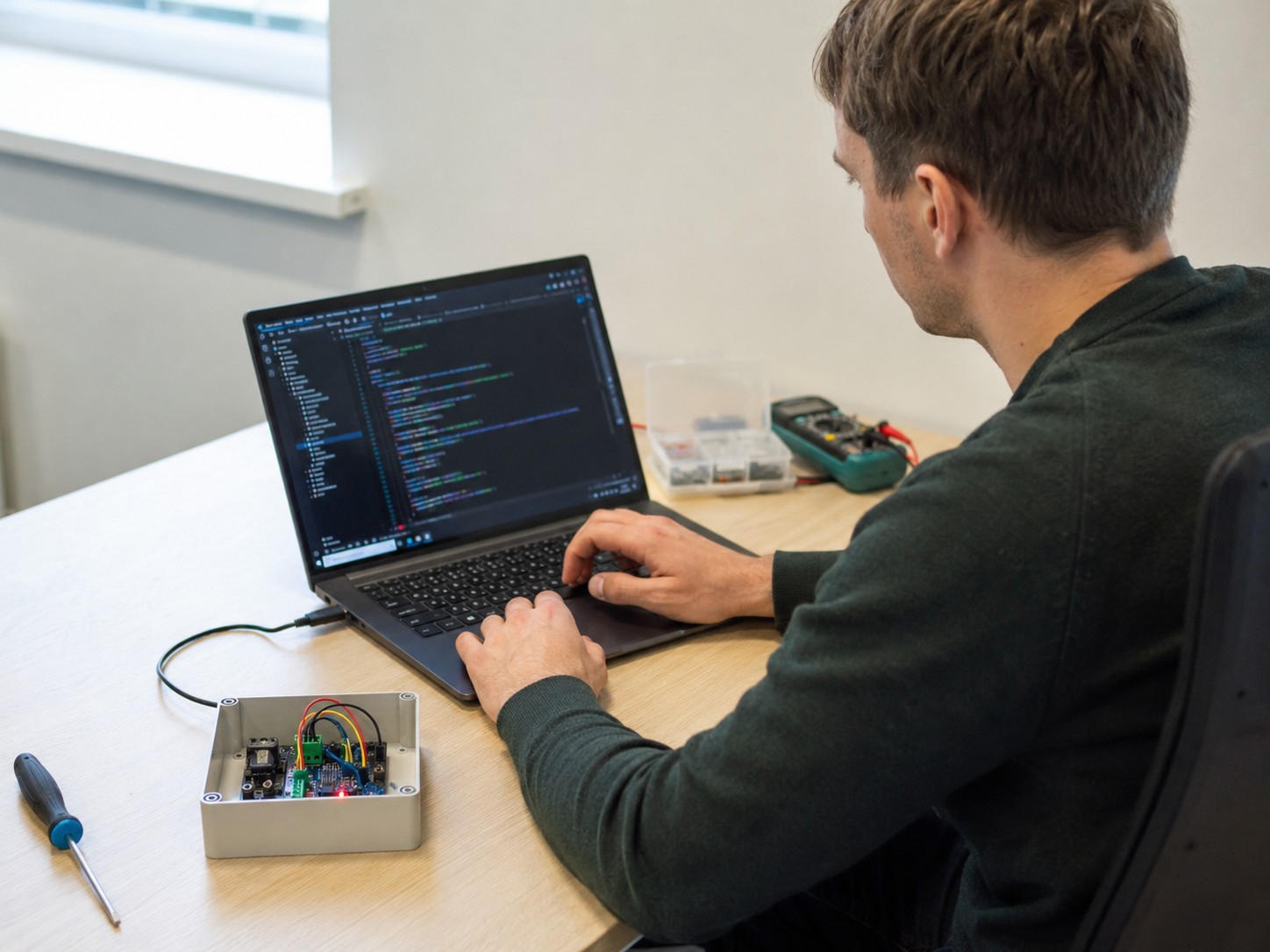
IoT device development combines electronics, sensors, wireless connectivity and software into a complete engineering solution. These devices collect data, process it and transmit relevant information to cloud platforms, control panels or other connected systems.
The development process integrates hardware, embedded software and communication technologies into a single system. Depending on the application, an IoT device can monitor environmental conditions, track the performance of equipment, detect changes or enable remote monitoring and control.
IoT solutions provide real-time visibility into operations while creating opportunities for automation, data analysis and more efficient process management. As a result, they are widely used across industries including manufacturing, energy, smart buildings, industrial equipment and connected consumer products.
Problems that can be avoided
Why choose Revismo for IoT device development?
A complete engineering approach
The performance of an IoT device depends on the integration of hardware, embedded software, mechanics, connectivity and user interaction. We develop these elements as a complete engineering solution, ensuring decisions across different disciplines support the same product.
Development driven by project goals
Every project starts with understanding the problem to be solved, the intended use and the required functionality. Based on these requirements, we select the appropriate sensors, components, communication technologies and software architecture.
Multidisciplinary engineering expertise
Revismo combines expertise in IoT development, product development, CAD design, industrial design, product safety and CE compliance. This integrated approach helps coordinate every stage of the project while reducing conflicts between different engineering disciplines.
Designed for the entire product lifecycle
Successful IoT device development extends beyond the prototype. We consider manufacturing, power consumption, maintenance, software updates, cybersecurity and future product evolution from the beginning. Addressing these aspects early results in more reliable, scalable and maintainable products.
Turning data into practical value
Collecting data should always serve a clear purpose. A well-designed IoT solution enables real-time equipment monitoring, detects anomalies, automates processes and provides meaningful information that supports better decision-making.
IoT device development workflow
Defining project objectives
Every project begins by defining the device’s purpose, users and operating environment. We identify the required functionality, the data to be collected, system integrations and the operating conditions the solution must reliably support.
System architecture design
We develop the overall system architecture and select suitable sensors, controllers, communication technologies and software components. We also define how data is processed within the device and transmitted to cloud platforms, user interfaces or other connected systems.
Hardware and software development
We develop the electronics, embedded firmware, software and required control functions. When needed, we integrate the device with existing information systems, industrial automation platforms or third-party solutions.
Prototyping and testing
We build and evaluate a prototype, verifying functionality, measurement accuracy, power consumption, connectivity and overall reliability. Testing is carried out under realistic operating conditions to validate performance and refine the engineering solution.
Compliance and manufacturing readiness
We identify the applicable requirements for electrical safety, electromagnetic compatibility (EMC), radio equipment, cybersecurity and other relevant regulations. Where required, we support compliance testing and prepare the technical documentation needed for CE compliance.
Production and further development
We finalise the product for manufacturing, prepare the required production files and technical documentation and support the production of the first units. When needed, we continue development by adding new features, integrations and future product versions.
What value does a well-designed IoT solution provide?
A successful IoT solution delivers far more than a single function. Well-designed hardware, reliable connectivity and a robust software architecture ensure that the device operates consistently, can be maintained efficiently and can be expanded with new functionality as requirements evolve.
A carefully engineered solution also considers manufacturing, cybersecurity, power efficiency, system integration and regulatory compliance from the outset. This reduces the need for costly redesigns while providing a strong engineering foundation for future product generations, digital services and data-driven business models.

If anything is still unclear
Revismo’s IoT development service begins with hardware and software development and concludes with prototype manufacturing. Where required, we also develop data visualisation solutions and integrate them with the client’s existing systems.
During the final stages of development, we test device reliability, durability and functionality under realistic operating conditions. In addition, we prepare the solution for certification and produce the necessary manufacturing and technical documentation to ensure the product meets regulatory requirements and is ready for production.
The cost and development timeline of an IoT solution are primarily influenced by product complexity, the number of sensors used and the selected connectivity technology. Additional effort is often required for data processing, visualisation platforms and system integrations, which can increase both project duration and cost.
Prototype development, testing and certification must also be taken into account, as these activities are essential for achieving production readiness and regulatory compliance.
Most IoT devices require certification because they incorporate wireless communication technologies and electronic components. Depending on the solution, compliance with wireless communication standards, electromagnetic compatibility (EMC) requirements, Low Voltage Directive (LVD) requirements, product safety standards and CE marking regulations for the European market may be necessary. The scope of certification depends on the product’s functionality, the technologies used and the target markets where the device will be sold.
To begin an IoT development project, a clear understanding of the product’s purpose, use cases and required functionality is needed. It is also important to define the preferred connectivity technology, such as Wi-Fi, Bluetooth, LTE, NB-IoT or another communication protocol, together with any required integrations.
Target markets should also be identified at an early stage, as regulations and certification requirements vary between regions and can significantly influence both hardware and software development decisions.
Make your devices smarter
A successful IoT product combines reliable hardware, embedded software and connectivity into a manufacturing-ready solution. We help turn your idea into a prototype and guide it through to series production.

Recent projects and client stories
Get in touch
Whether it is a new idea or the further development of an existing solution, we help find the right route to a working result. Call or write to us and we will discuss how we can help.