
Risk Analyses
Risk analysis is one of the most important steps in ensuring product safety.


Risk analysis identifies the hazards associated with a product, machine or device, evaluates their severity and likelihood, and defines the measures required to reduce risk. The analysis covers the entire product lifecycle, from transportation and installation through operation, maintenance and end-of-life disposal.
At Revismo, we treat risk analysis as an integral part of product development rather than simply a mandatory document. Conducting the analysis early helps support sound engineering decisions, reduce residual risks and ensure the product is suitable for its intended use while meeting safety requirements and applicable regulations.
Problems that can be avoided
Why choose Revismo for risk analysis?
A comprehensive approach to product safety
Our risk analyses are based on how the product, machine or device actually operates and is intended to be used. We evaluate risks throughout the entire lifecycle, from transportation and installation to operation, maintenance and disposal.
An engineering-driven methodology
Risk analysis is more than identifying hazards and completing checklists. Our engineers evaluate how the product’s design, control systems, operating methods and environmental conditions influence safety, allowing us to recommend the most effective engineering controls for reducing risk.
Practical risk reduction measures
The outcome is more than a list of identified risks. We provide practical recommendations to eliminate or reduce them. These may include design modifications, safety guards, protective functions, control system improvements, warnings or updates to the user manual.
Addressing risks early in development
Risks are most effectively reduced while the product is still being developed, when engineering decisions can still be changed. An early risk analysis helps prevent costly redesigns, inconsistencies in technical documentation and safety issues that might otherwise appear during production or operation.
Integrated with CE compliance and technical documentation
Risk analysis is an essential part of CE compliance and the technical documentation for many products. We identify the applicable requirements and prepare the analysis so it aligns with the rest of the technical file and the overall conformity assessment process.
Risk analysis workflow
Collecting project information
We begin by gathering the technical information required for the analysis. This may include engineering drawings, CAD models, photographs, operating cycle descriptions, automation concepts and information about the intended operating environment. Any missing details are clarified together with the client.
Defining product functions and use cases
We identify the product’s functions and analyse activities related to transportation, installation, operation, setup, cleaning, maintenance and troubleshooting. This helps determine where users or other people may be exposed to potential hazards.
Hazard identification
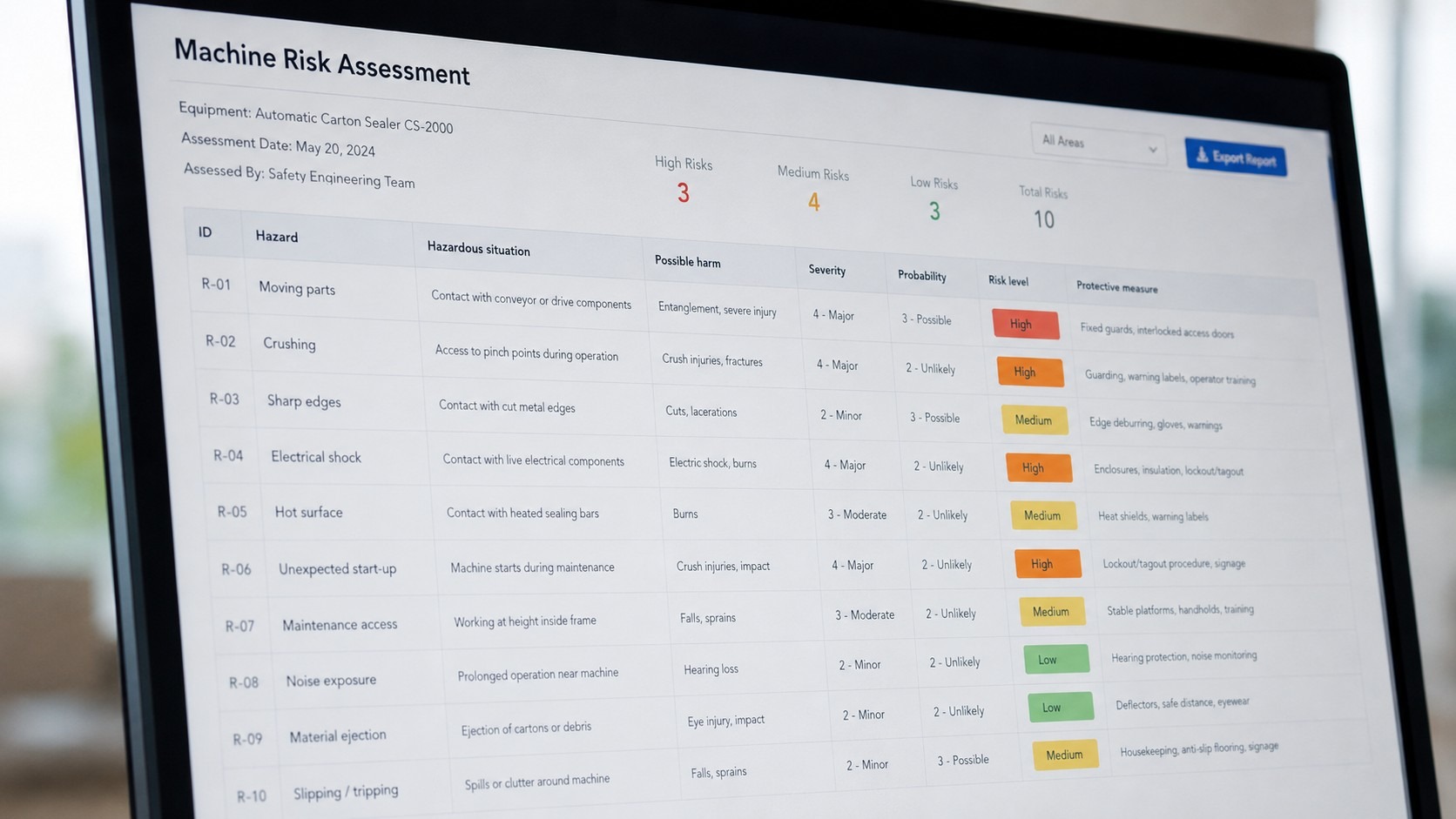
We identify mechanical, electrical, ergonomic and other potential hazards. Each hazard is linked to specific operating stages, use scenarios and reasonably foreseeable misuse.
Risk evaluation
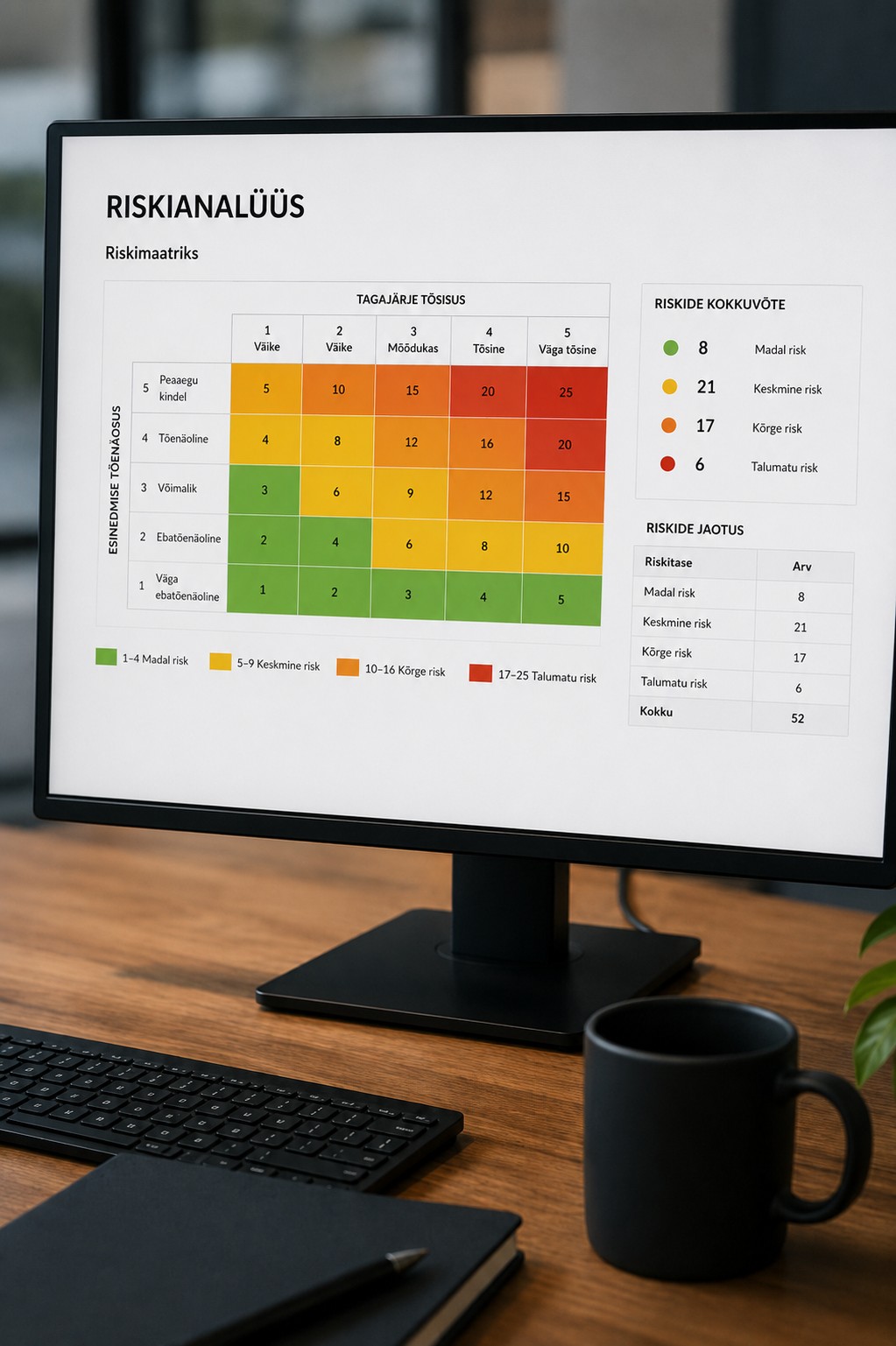
Each identified hazard is evaluated based on the severity of its potential consequences and the likelihood of occurrence. This provides a structured basis for prioritising which risks require additional mitigation measures.
Defining risk reduction measures
We recommend technically justified measures to eliminate or reduce identified risks. Following recognised safety principles, we prioritise inherently safe design solutions, followed by protective measures and safety functions, with warnings, user instructions and administrative controls applied where necessary.
Residual risk evaluation and documentation
After risk reduction measures have been implemented, we evaluate any remaining residual risks and determine what safety information should be included on the product or in the user manual. All project data, risk evaluations, mitigation measures and conclusions are compiled into a clear technical document suitable for CE compliance and internal safety documentation.
Why risk analysis should never be overlooked
Risk analysis is one of the fundamental tools of product and machine safety. Its purpose is not only to document known hazards but also to systematically evaluate how a product may behave in different operating conditions and determine the engineering and organisational measures needed to reduce risk.
For many CE-marked products, risk analysis is an essential part of conformity assessment and the technical documentation. It demonstrates that potential hazards have been identified, appropriate safety measures have been implemented and users have been informed about any remaining residual risks. Without a comprehensive risk analysis, the product design, user manual and supporting technical documentation may fail to accurately reflect the actual safety risks.
The greatest value of risk analysis comes when it is carried out early in the product development process. Hazards identified at this stage can often be eliminated through improvements to the design, control system or operating concept before prototyping and manufacturing begin. Addressing the same issues later typically requires more engineering effort, higher costs and modifications to products that have already been built.

If anything is still unclear
The time required to complete a risk analysis depends primarily on the complexity of the product, machine or system being analysed. For simpler equipment, hazards and mitigation measures can usually be assessed relatively quickly and the analysis is typically completed within 1–2 days.
For more complex machinery, production lines or IoT solutions, both the number of risk scenarios and the required level of detail increase significantly. In these cases, a risk analysis may take between 1 and 4 weeks, depending on the number of functions, integrated technologies and the required scope of documentation.
Yes. Revismo performs risk analyses for both newly developed products and machinery or equipment already in operation. We assess both modern solutions and older machines where documentation may be incomplete, outdated or unavailable.
For existing machinery, a risk analysis helps identify deficiencies that may affect safety, reliability or compliance with current requirements. Where necessary, we provide recommendations for improvements that enhance safety and support the continued operation of the equipment.
Yes. Every risk analysis includes a clear list of recommended actions to reduce identified risks. These may include mechanical safeguarding, functional safety solutions, operating instructions, training requirements or technical modifications designed to improve the overall safety of the product or machine.
Identify risks before they become hazards
The earlier risks are identified, the easier and more cost-effective they are to reduce. Contact us to discuss your product’s safety, identify potential risks and define the next steps.
Recent projects and client stories
Get in touch
Whether it is a new idea or the further development of an existing solution, we help find the right route to a working result. Call or write to us and we will discuss how we can help.